Article Summary
When you think about Christian leadership, The Art of War probably isn’t the first book that comes to mind. However, Sun Tzu captured a principle every Christian leader needs to understand: knowing who your enemy is and how they work. Jesus modeled this kind of discernment in Matthew 10:16, instructing His disciples to be “as shrewd as snakes and harmless as doves.” Christian leaders need to see people for who they really are, understanding opposition without acting like it, so they can protect those they lead and make wise, strategic decisions.
Full Article1
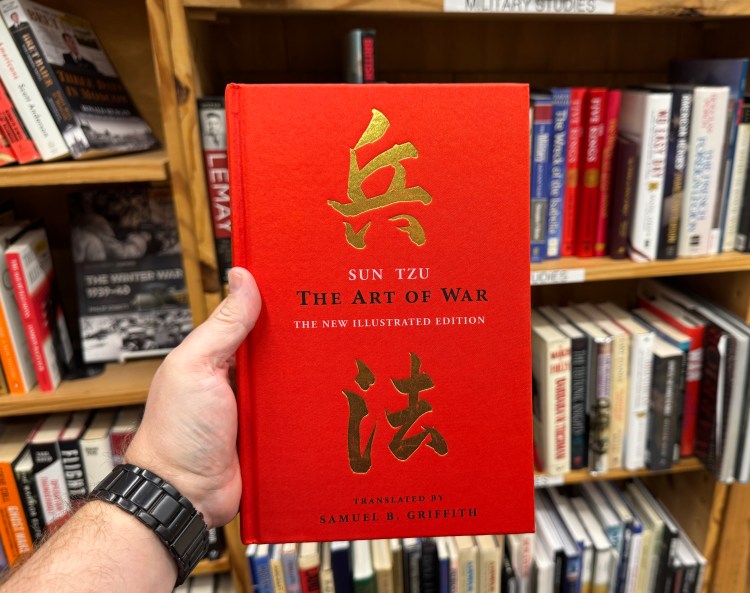
When you think about Christian leadership, The Art of War by Sun Tzu is probably isn’t the first book that comes to mind. Written centuries before Christ, it’s a manual for military strategy, not ministry. However, Sun Tzu understood something every Christian leader still needs to learn today: the importance of knowing who your enemy is and how they work.
As a leader, it can sometimes be difficult to know who to trust. We may encounter people who are not who they seem to be. These are people who appear to want to help us but actually want to harm us. Because of this, it is important to have discernment.
In The Art of War, military strategist Sun Tzu observed, “Determine the enemy’s plans and you will know which strategy will be successful and which will not.”2 When we know how our enemy works, we can plan accordingly. Our discernment will then resemble that of Jesus in the desert, rather than Adam and Eve in the garden.
Discernment is the ability to see people for who they really are. It’s the ability to distinguish safety from harm. When you have discernment, you can identify who is a sheep, who is a wolf, and who is a wolf in sheep’s clothing. Because of this, it is essential for Christian leaders to have this kind of discernment.
When we look at the leadership of Jesus, we see that He taught His disciples to have discernment. In Matthew 10:16, Jesus said, “I am sending you out as sheep among wolves. So be as shrewd as snakes and harmless as doves” (NLT).
Jesus’ instruction to be “shrewd” is thought-provoking. Shrewdness might not be a characteristic you associate with leadership. It’s not something you would list on a résumé or praise if you saw it in someone else. The word “shrewd” could be substituted for “wise,” but the word choice was intentional. “Shrewd as snakes” is a direct reference to Genesis 3:1: “The serpent was the shrewdest of all the wild animals the Lord God had made” (NLT).
In that story, the serpent (Satan) used his shrewdness to tempt Adam and Eve. As a result, sin entered the world, and humanity’s relationship with God became estranged. Based on this passage, shrewdness could be seen as a characteristic of Satan. While this book focuses on imitating Jesus, Matthew 10:16 could be misunderstood as instructions to imitate the Devil. As Christians, we don’t want to imitate Satan, but we do want to understand how he works.
Jesus warned His disciples that they were being sent out “as sheep among wolves,” meaning they would encounter harmful people. In such situations, it’s not enough to know how your team works. You must also know how your enemy works. As Sun Tzu taught, understanding the enemy’s plans enables us to act wisely and strategically.
While Christian leaders need to have this kind of “devilish wisdom,” we also need to keep it in check. That’s why Jesus’ instruction had two parts: “Be as shrewd as snakes and harmless as doves.” Satan’s shrewdness caused harm; Jesus’ shrewdness prevented it. We must think like the enemy without acting like the enemy.
A Christian has discernment. Jesus modeled discernment and instructed His followers to do the same. As Christian leaders, we need to see people for who they really are. To do that, we must know how our enemy thinks and works. When we have discernment, we can protect ourselves and those we lead from harm.
Application Question: Have you ever worked with people who were not who they seemed to be? Looking back, were there any signs they shouldn’t be trusted?
Notes
- This article is adapted from Principle 10 of my book, A Leader Worth Imitating: 33 Leadership Principles from the Life of Jesus. ↩︎
- Sun Tzu, The Art of War, trans. Samuel B. Griffith (New York: Shelter Harbor Press, 2021), 52.. ↩︎
Subscribe
Subscribe to have posts like this emailed to you.
 Nick Chellsen